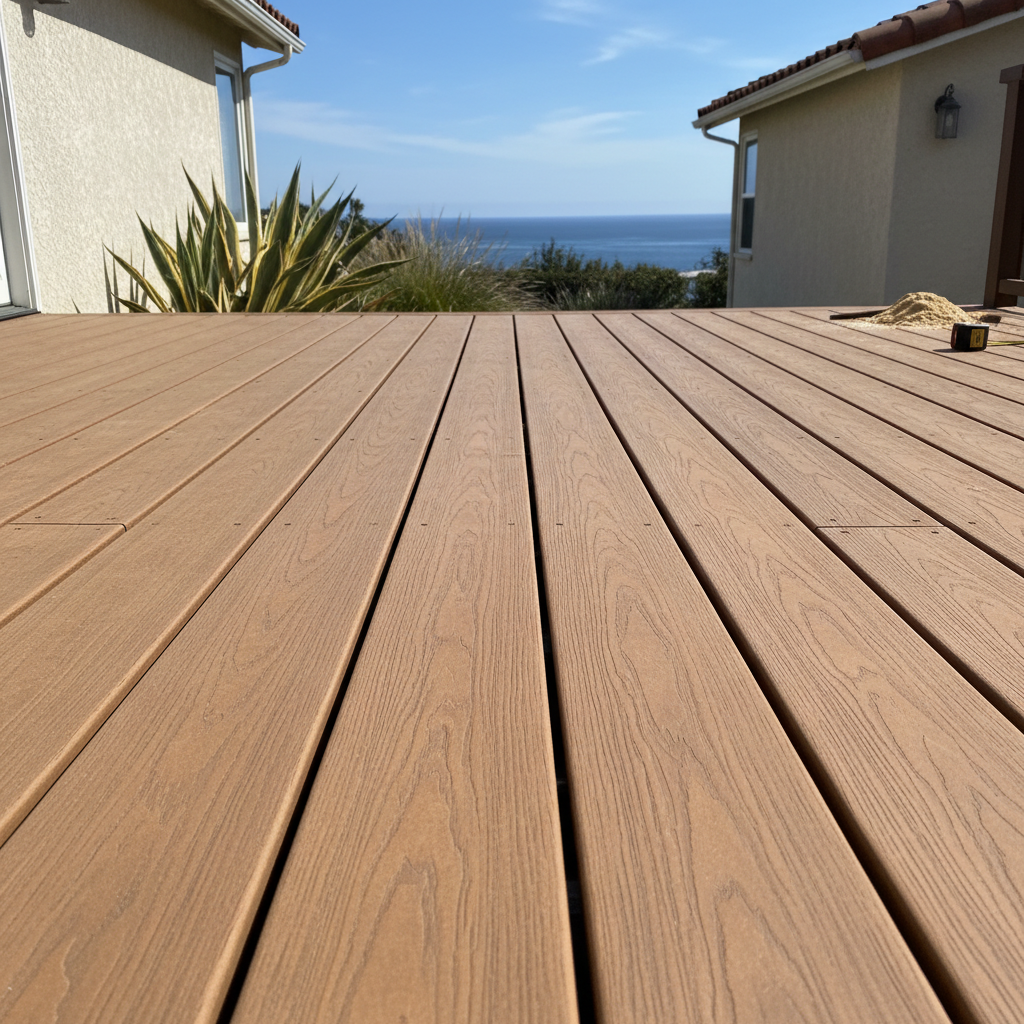
What's the real difference between composite and wood decks?
Okay, let's get straight to it. The biggest difference, hands down, is maintenance. With a wood deck, you're looking at sanding, staining, sealing, and sometimes even replacing boards every few years. That's especially true with our coastal sun and humidity here in Oceanside. Composite? You wash it. That's pretty much it, honestly. It's made from a mix of wood fibers and recycled plastic, so it doesn't rot, splinter, or get eaten by termites. You're basically trading a higher upfront cost for long-term freedom from upkeep.
How long do composite decks actually last here in Oceanside?
Most composite deck manufacturers offer warranties anywhere from 25 years to a lifetime, and honestly, they're not exaggerating much. I've put in plenty of composite decks around places like the Fire Mountain neighborhood, where they get full sun all day, and they hold up incredibly well. The key, of course, is proper installation and choosing a quality brand. You'll see some fading over decades, sure, but the structural integrity and resistance to our salty air and strong UV rays? That stuff is built to last.
Is composite decking slippery when wet, especially near a pool?
That's a good question, and it's one I hear a lot, especially from folks with pools or who just want to be safe after a morning marine layer. The short answer is: it depends on the brand and the specific product line. Some older or cheaper composite materials could be a bit slick. But modern composite decking, especially the capped varieties, often has textured surfaces designed to improve traction. Many brands even have specific lines rated for slip resistance, perfect for around a pool or if you're worried about kids running around. I always recommend checking the manufacturer's specs if slip resistance is a major concern for your family.
Can composite decking get too hot for bare feet in our California sun?
Yep, it can. Just like concrete or dark asphalt, composite decking can absorb and retain heat, especially darker colors. On a scorching August afternoon, a dark gray or brown composite deck can get pretty warm underfoot. Lighter colors will always be cooler. If you're someone who likes to walk barefoot a lot, or you've got pets, consider lighter shades or look for brands that specifically market 'cooler' technologies. Some newer composite boards are engineered to reflect more sunlight, which helps. It's not usually a deal-breaker, but it's definitely something to think about when you're picking colors for your Oceanside Deck Builders project.
What about fading and staining? Do composite decks really stay looking new?
They stay looking good for a long, long time, but 'new' is a strong word. Fading is minimal with quality capped composite, but it's not zero. You might notice a slight mellowing of the color over the first few months, then it stabilizes. As for staining, most common spills like BBQ grease or wine wipe right up if you get to them quickly. The plastic cap on the good stuff is designed to resist absorption. However, things like sunscreen or certain chemicals can sometimes leave a mark if left to sit, so a quick clean is always best. It's miles better than wood, where every spill is a potential permanent stain, but it's not entirely bulletproof.
How much does a composite deck cost compared to a wood deck?
This is usually the big one for most homeowners. Generally, composite decking materials cost more upfront than pressure-treated wood. Sometimes significantly more, depending on the brand and features. However, when you factor in the long-term costs of maintenance for a wood deck – the annual cleaning, staining, sealing, and eventual repairs – composite often ends up being more cost-effective over its lifespan. You're paying more initially to save a ton of time, effort, and money down the road. Think of it as an investment in your free time and a lower total cost of ownership. Plus, the resale value of a well-built, low-maintenance composite deck can be a real bonus for your home.