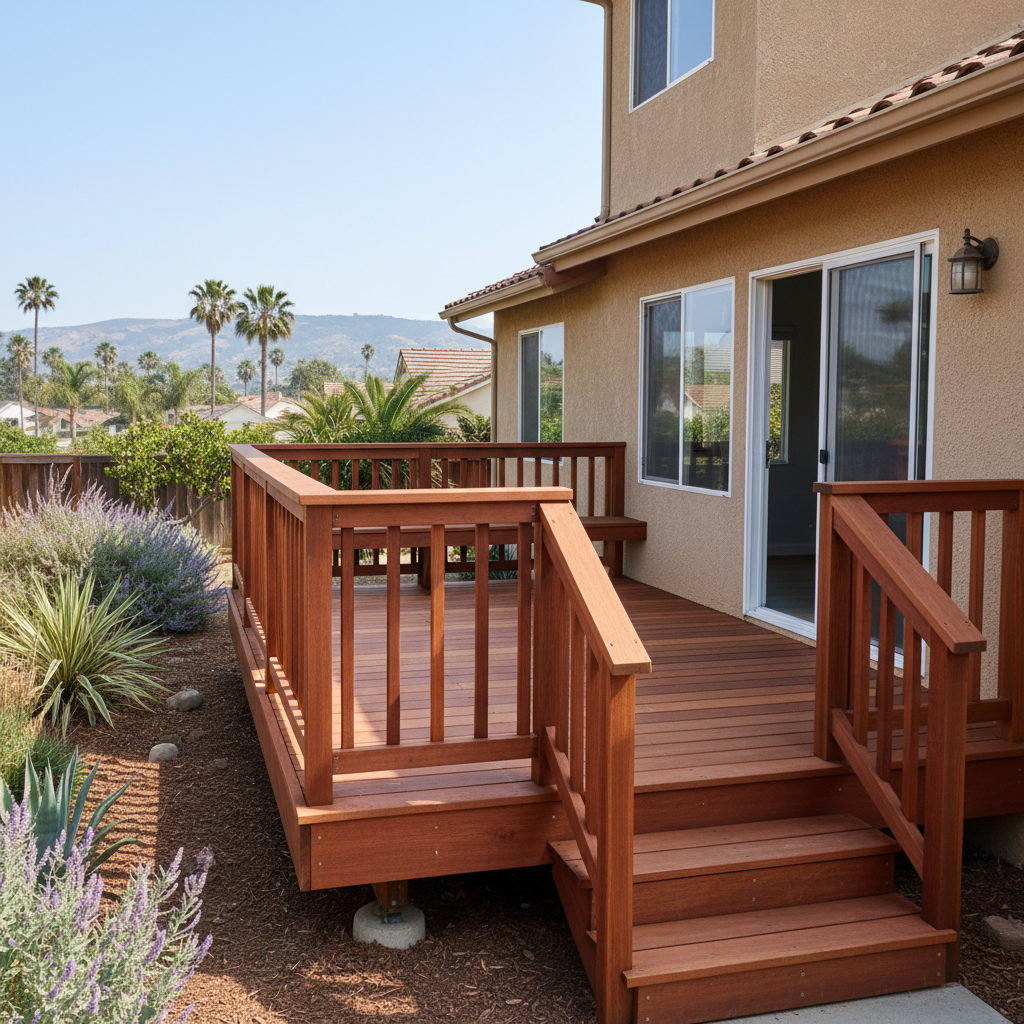
Alright, let's talk about money. You want a new deck, and one of the first questions that pops into your head is, "How much is this going to cost me?" It's a fair question, and honestly, it's one of the most common ones I hear here at Oceanside Deck Builders. There's no single magic number, but I can give you a solid idea of what to expect and what factors really change your final bill.
What Makes Deck Prices Go Up or Down?
A lot of things factor into a deck's price. It's not just the size, though that's a big one, of course. Think about it like building a small house – you've got materials, labor, design work, permits, and a whole bunch of other details. Here's a breakdown of the main things that affect the cost:
Size and Complexity: This one's pretty obvious. A small, simple square deck will always cost less than a large, multi-level one with tricky angles and built-in features. Every corner, every step, every curve means more labor and more materials.
Material Choice: This is probably the biggest variable. Pressure-treated pine is your most budget-friendly option. On the other hand, high-end composites or exotic hardwoods like Ipe will cost significantly more. For example, pressure-treated lumber might run you $8-15 per square foot just for the materials, while a good quality composite could be $15-30 per square foot. Redwood sits somewhere in the middle, often $12-25 per square foot for materials.
Deck Height and Foundation: A ground-level deck is simpler and cheaper. The moment you start getting off the ground, you need stronger footings, taller posts, and usually more complex framing. If your yard slopes a lot, or if we hit bedrock when digging for footings (which can happen in some of the older, hiller parts of Oceanside, believe it or not), that's going to add to the labor and possibly material costs for the foundation.
Railing Type: Railings aren't just for safety; they really change the look of your deck and, yes, they're a cost factor. Basic pressure-treated wood railings are the cheapest. Aluminum balusters, composite railings, cable railings, or glass panels all jump up in price, sometimes quite a bit. Cable railings, for instance, look fantastic, but they require precise installation, and the materials aren't cheap.
Permits and Design: Don't try to skip these. In Oceanside, any deck over 200 square feet, or more than 30 inches off the ground, or attached to your house, almost certainly needs a permit. Getting plans drawn up, submitting them to the city, and going through inspections adds time and a few hundred to over a thousand dollars to the project. It's non-negotiable for a safe, legal deck, and a good contractor handles all this for you.
Site Accessibility: If we can't easily get our equipment and materials to your backyard, it means more manual labor, which means more cost. Tight side yards or steep hills can definitely make the overall price go up.
Add-ons and Features: Built-in benches, planters, pergolas, lighting, outdoor kitchens – these are all wonderful additions, but they're extra. Each one is basically a mini-project in itself.
Typical Deck Costs in Oceanside
Okay, let's get to some actual numbers. Keep in mind, these are broad ranges, and your specific project could be higher or lower depending on all those factors I just mentioned. These figures generally include materials, labor, and permit fees for a standard, attached deck.
Basic Pressure-Treated Deck (150-300 sq ft): You're probably looking at $35 - $55 per square foot. So, a 200 sq ft deck might run you $7,000 to $11,000. This gets you a simple, single-level deck with basic wood railings.
Mid-Range Composite or Redwood Deck (200-400 sq ft): For a good quality composite or redwood deck, expect to pay $55 - $85 per square foot. A 300 sq ft deck could be $16,500 to $25,500. This often includes nicer railings (like composite or aluminum balusters) and maybe a few steps.
High-End Composite or Hardwood Deck (300+ sq ft): If you're going for premium materials, multiple levels, intricate designs, or features like cable railings, you're in the $85 - $120+ per square foot range. A 400 sq ft high-end deck could easily hit $34,000 to $48,000 or more. This is where you get into custom designs, premium finishes, and often built-in elements.
Remember, these are just averages. A small, complex deck can easily cost more per square foot than a large, simple one, so don't be surprised.
What Should a Quote Include?
When you get a quote from Oceanside Deck Builders (or any reputable contractor, for that matter), it should be detailed. Don't accept a one-page estimate with just a total number. Here's what you should expect to see:
Detailed Scope of Work: What exactly are we building? Dimensions, number of levels, type of stairs, etc.
Material Specifications: Brand and type of decking, railing system, fasteners, concrete for footings, and so on.
Labor Costs: Sometimes broken out, sometimes included in the per-square-foot price, but it should be clear that it's covered.
Permit Fees: Who is responsible for pulling the permits, and are the fees included or separate?
Demolition and Debris Removal: If you have an old deck, is taking it down and hauling it away included?
Site Preparation: Any grading, leveling, or special foundation work.
Warranty Information: What's covered, and for how long?
Payment Schedule: How and when payments are due.
How to Avoid Overpaying
Nobody wants to get ripped off, right? Here's my advice:
Get Multiple Bids: Three detailed quotes from licensed, insured contractors is ideal. This helps you compare apples to apples and understand the going rate for your project.
Be Specific About What You Want: The more details you give upfront, the more accurate the bids will be. Changing your mind mid-project is almost always more expensive.
Don't Always Go with the Lowest Bid: A super low bid can be a red flag. It might mean they're cutting corners, using cheap materials, or aren't properly insured. You really do get what you pay for in construction.
Check References and Licenses: Always. Call past clients. Verify their contractor's license with the CSLB (Contractors State License Board). Make sure they have insurance.
Understand the Contract: Read every word before you sign. If you have questions, ask them until you fully understand. A good contractor will take the time to explain everything.
Plan for the Future: Think about maintenance. A cheaper deck material might need more upkeep (staining, sealing) later on, which adds to its long-term cost. Sometimes, spending more upfront on a low-maintenance composite saves you money and headaches over the years.
Building a new deck is a significant investment, but it adds a ton of value and enjoyment to your home. Doing your homework, understanding the costs, and choosing the right contractor will ensure you get a beautiful, safe deck that you'll love for years to come.