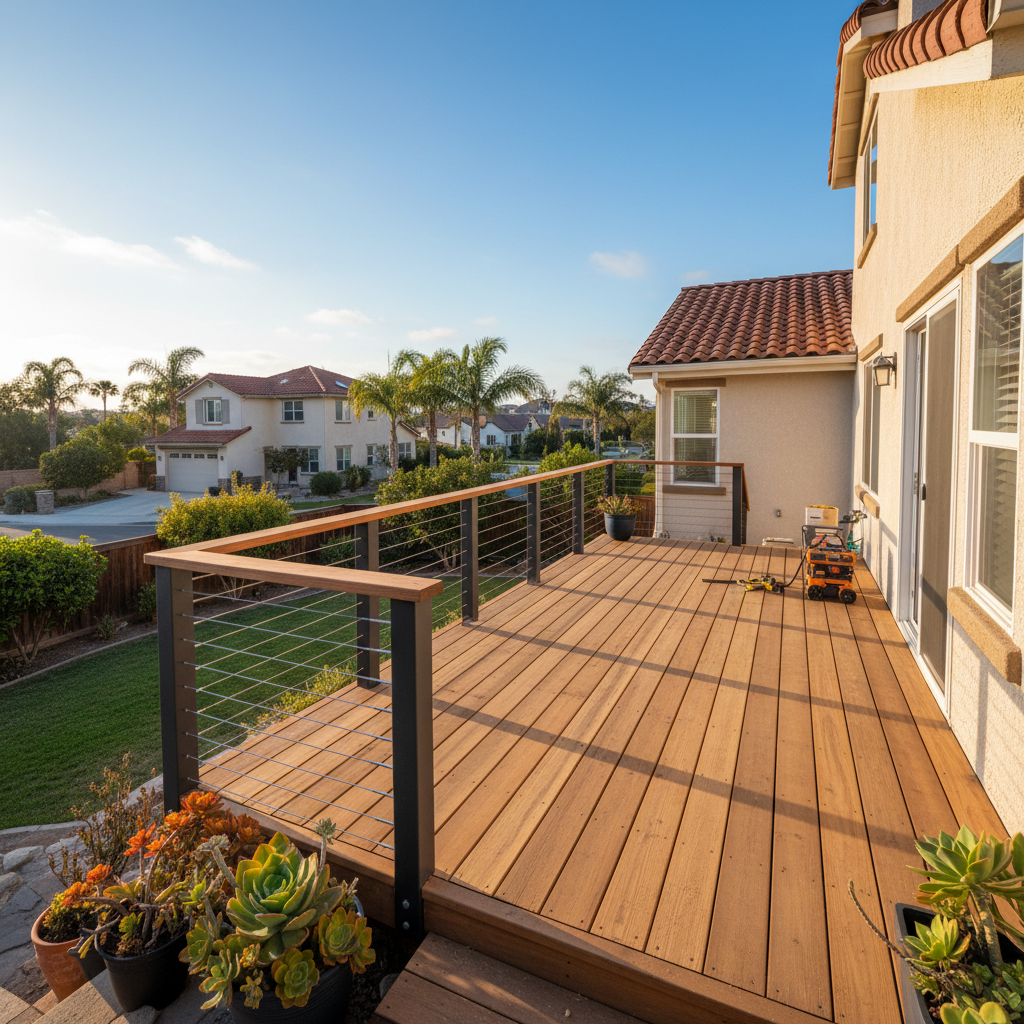
So, you've got a deck already, or maybe you're just dreaming one up. Either way, you're probably thinking about the railings. Most folks see them as a design element, a way to finish off the look. And yeah, they totally do that. But here in Oceanside, especially with our salty air and ocean breezes, deck railings are way more than just pretty. They're about keeping everyone safe, making sure things last, and protecting your investment for the long haul.
Why Oceanside Railings Are Different
I've been building decks in this town for years now, from the older spots up on the hills in Fire Mountain to the newer developments closer to Camp Pendleton. One thing I've definitely learned? What works inland just won't cut it here. Our coastal environment is seriously tough on materials. That constant salt spray, even if you're a few miles from the beach, speeds up corrosion and breaks down finishes faster than you'd ever believe.
You can't just throw up any old railing system and expect it to hold up. I've seen railings that looked fantastic for a year or two, then started showing rust streaks or loose connections because the hardware wasn't marine-grade. Or maybe the material itself just wasn't designed for this kind of exposure. It's a real pain for homeowners when their brand-new deck starts looking tired way too soon, isn't it?
Common Railing Types & What I See Here
There are a ton of options out there, and each one has its good points and bad points, especially when you're dealing with our climate:
Wood Railings: They've got that classic look, and they can be really beautiful. Redwood and cedar are popular choices. The big thing here is maintenance. You've got to stay on top of sealing and staining to protect them from moisture and UV rays. If you don't, they'll fade, crack, and eventually rot. I've done plenty of repairs on older wood railings that just weren't kept up.
Composite Railings: These are a solid pick if you're looking for something low-maintenance. They're made to resist rot, insects, and fading. The color usually goes all the way through, so scratches aren't as obvious. They hold up really well against the salt air, which is why we often recommend them at Oceanside Deck Builders for folks who want to spend more time enjoying their deck than working on it.
Metal Railings (Aluminum, Steel, Wrought Iron): These can give you sleek, modern lines or a more classic, elegant feel. Aluminum is a fantastic choice for our area because it naturally resists rust. Powder-coated finishes add even more protection. Steel and wrought iron can look amazing, but they absolutely need proper galvanization and high-quality coatings to stop rust, especially on the welds. If you spot a rusty railing in Oceanside, chances are it wasn't prepped right for the coast.
Cable Railings: These are super popular because they give you those unobstructed views — a huge plus when you've got even a peek of the ocean. The key here is using marine-grade stainless steel cables and fittings. Anything less, and you'll be dealing with rust and corrosion in no time. The posts can be wood, composite, or metal, but the cables themselves really need to be top-notch.
Glass Panel Railings: Talk about maximizing your view! These are stunning. The glass itself holds up fine, but the mounting hardware is super important. Again, marine-grade stainless steel is a must. You also need to think about how you'll keep them clean. Salt spray can leave spots, so they'll need regular wiping if you want that crystal-clear view.
Why Local Expertise Isn't Just a Buzzword
When you're putting in deck railings, it's not just about picking a material. It's about knowing how that material will actually perform right here in Oceanside. It's about understanding local building codes, which can be pretty specific about railing height, spacing, and how much weight they need to hold for safety. We've got kids, pets, and sometimes even adults leaning on these things, so they really need to be rock solid.
A builder who's only worked inland might not think twice about using standard galvanized screws, but I know from experience those will start showing rust in a year or two near the coast. We only use stainless steel fasteners and hardware for anything exposed to the elements. It costs a little more upfront, sure, but it saves you a ton of headaches and repair bills later on.
Plus, we know the best suppliers for materials that are proven to stand up to our unique coastal conditions. We're not just guessing; we've seen what works and what doesn't over years of projects right here in your neighborhood. So, when you're thinking about your deck railings, remember it's not just about how they look. It's about building something safe, durable, and ready to stand up to everything our beautiful Oceanside environment throws at it.