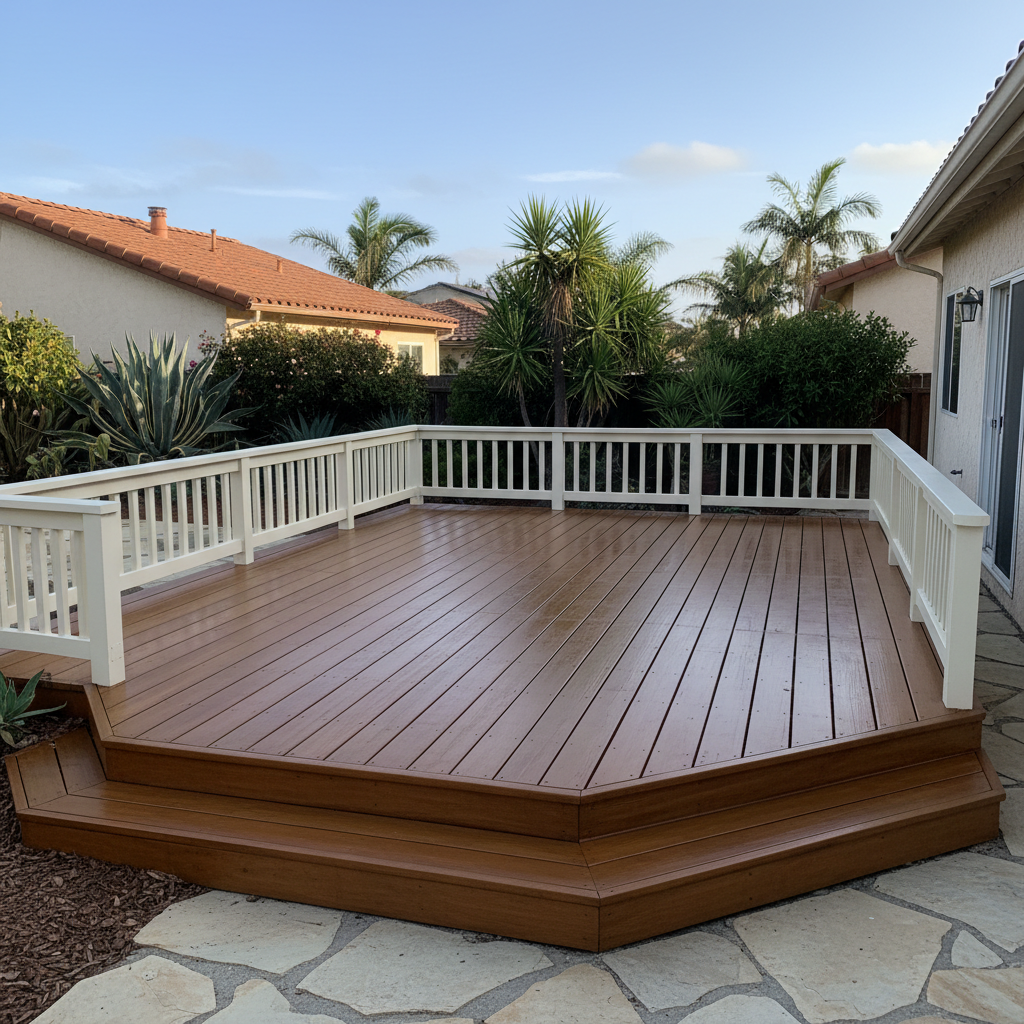
Alright, let's talk about deck painting and staining. It seems straightforward, right? Grab a can, slap it on, and boom – new deck. If only it were that simple. As someone who's seen a lot of decks come and go in Oceanside, I can tell you there are some common pitfalls homeowners fall into. They often lead to wasted money, a crummy-looking deck, or even worse, a deck that needs a full do-over way too soon.
Mistake #1: Skipping the Prep Work (or Doing it Wrong)
This is probably the biggest one, honestly. You wouldn't paint a dirty wall, so why would you stain a dirty deck? I see it all the time. People get excited, buy the stain, and just go for it. But if your deck isn't properly cleaned, sanded, and dried, that new finish isn't going to stick. And it's definitely not going to last. You'll end up with peeling, uneven color, and a whole lot of frustration.
- Not cleaning thoroughly: Just hosing it down isn't enough. You need a good deck cleaner, a stiff brush, and maybe even a pressure washer (used carefully, or you'll damage the wood). Get rid of all the dirt, mildew, algae, and any old flaking finish.
- Ignoring repairs: Loose boards, popped nails, splintered wood – fix that stuff before you stain. Stains and paints aren't magic wands that make structural issues disappear.
- Skipping the sanding: Even if your deck looks smooth, a light sanding opens up the wood grain. This lets the stain penetrate better. It makes a huge difference in how long your finish lasts and how good it looks.
- Not letting it dry: This is crucial, especially with our coastal humidity here in Oceanside. You need at least 24-48 hours of dry weather after cleaning before you even think about applying anything. If there's moisture trapped in the wood, your finish will fail. Period.
Mistake #2: Choosing the Wrong Product for Our Climate
Oceanside weather is pretty great, but it's tough on decks. We get plenty of sun, salt air, and occasional dampness. That means not just any old stain or paint will do. I've seen folks use interior paints outside, or cheap stains that promise the world but deliver nothing.
You need products specifically designed for exterior use, with UV protection and mildew resistance. Oil-based stains tend to penetrate deeper and offer better protection for natural wood. Water-based options, on the other hand, are easier to clean up and often come with better color retention over time. Know the difference and pick what's right for your deck's wood type and your desired look. Don't just grab the cheapest can on the shelf, thinking it'll be fine.
Mistake #3: Hiring the Cheapest Bid Without Asking Questions
Look, I get it. Everyone wants to save a buck. But when it comes to something as important as your deck, going with the absolute lowest bid without doing your homework is a recipe for disaster. I've seen decks stained by folks who clearly didn't know what they were doing, leaving lap marks, uneven coats, or worse, damaging the wood.
When you're getting quotes, ask specific questions:
- What kind of prep work do you do? (Listen for cleaning, sanding, and repairs.)
- What products do you recommend and why?
- How many coats will you apply?
- Do you have references? Can I see examples of your work?
- Are you licensed and insured? (This is non-negotiable for any contractor, including us at Oceanside Deck Builders.)
A contractor who gives you a super low price and can start tomorrow without even looking at your deck? That's a huge red flag. Good work takes time and proper materials.
Mistake #4: Not Understanding Maintenance Needs
A stained or painted deck isn't a